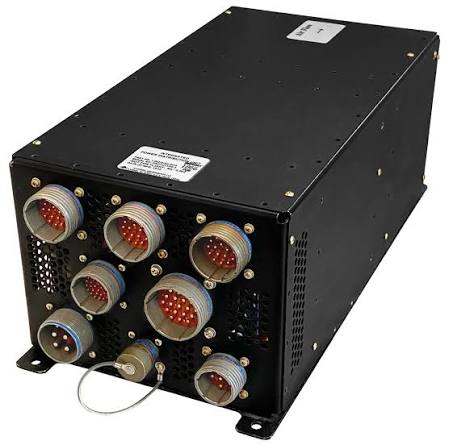
Avionics Power Modules
a ruggedized aerospace component that converts, regulates, and filters aircraft electrical power to deliver stable voltages to flight-critical navigation, communication, and cockpit control systems.
An Avionics Power Module (APM) serves as the foundational power management link within an aircraft’s electrical system architecture. Aircraft generators inherently produce erratic, raw power characterized by severe voltage spikes, surges, and frequency fluctuations. The primary objective of an APM is to ingest this harsh input power—commonly 115VAC at 400Hz, 28VDC, or advanced 270VDC high-voltage configurations—and transform it into clean, isolated, and highly regulated low-voltage DC channels (typically 3.3V, 5V, 12V, or stable 28V). These precise outputs safely drive sensitive microprocessors, flight control computers, radar sub-systems, and flight deck instrumentation.
To ensure uninterrupted flight safety, APMs integrate robust hold-up time management. Utilizing advanced internal capacitor banks, they seamlessly maintain constant power delivery during temporary power dropouts or generator switchovers, typically bridging critical gaps lasting 50 milliseconds to 200 milliseconds.
Because these modules operate in unconditioned, high-altitude environments, they are completely ruggedized against extreme physical stress. They utilize conduction cooling, sophisticated thermal management materials, and hermetic sealing to withstand operational temperatures spanning from -55°C to +125°C.
Compliance with rigid aerospace standards is mandatory for APMs. They are rigorously engineered and tested to satisfy MIL-STD-704 for input power characteristics, protecting downstream electronics from lightning strikes and reverse polarity. They adhere to MIL-STD-461 and DO-160 (Section 21) for strict electromagnetic interference (EMI) containment, preventing the power supply from disrupting vital communications or radio frequencies. Finally, compliance with DO-160 environmental guidelines guarantees the modules structurally survive severe mechanical shock, high-frequency engine vibrations, and rapid decompressive altitude drops. Ultimately, APMs deliver the uncompromising electrical reliability required to prevent catastrophic systems failure in modern commercial, military, and unmanned aircraft.
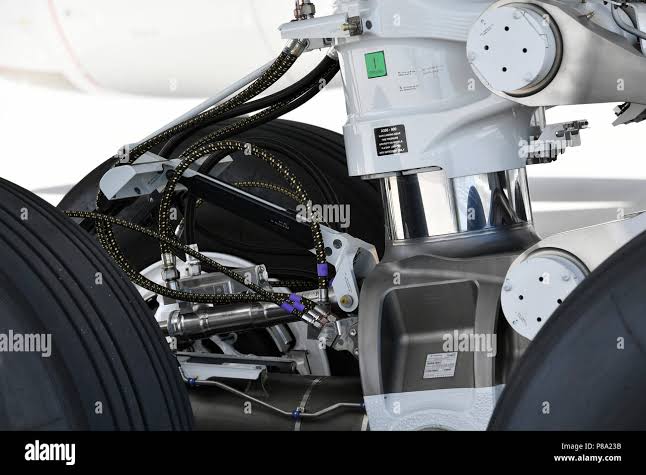
Hydraulic Line Components
constitute the rigid tubing, flexible hoses, fittings, and seals that safely route high-pressure fluid to actuate flight controls, landing gear, and braking systems.
Aircraft hydraulic line components form the vital circulatory network responsible for transmitting fluid power from hydraulic pumps to critical actuation systems across the airframe. Operating under immense pressure—typically ranging from 3,000 to 5,000 psi in modern commercial and military aircraft—these components must safely route hydraulic fluid to actuate landing gear, flight control surfaces, brakes, and thrust reversers without leaking or failing. The entire network is divided into rigid lines, flexible lines, and connecting hardware, each meticulously engineered to endure extreme mechanical, environmental, and thermal stresses.
Rigid lines are fabricated using high-strength seamless tubing made from titanium, corrosion-resistant stainless steel, or aluminum alloy. Titanium is heavily favored in high-pressure networks for its exceptional strength-to-weight ratio and fatigue resistance. Where components move relative to each other or experience intense vibrations—such as landing gear wells and engine nacelles—flexible hoses are used instead. These hoses feature an inner tube made of synthetic rubber or Teflon (PTFE), reinforced by multiple layers of braided stainless steel wire to prevent bursting under pressure.
Connecting these lines are specialized aerospace fittings, including flared and flareless compression fittings (such as MS and AN standards), which form metal-to-metal seals capable of defying high-frequency engine vibrations. Elastomeric O-rings and backup rings are embedded at joints to maintain hermetic seals.

Cabin and Safety Equipment
encompasses the critical survival, medical, and emergency systems designed to protect passengers and crew from onboard hazards, decompression events, and forced emergency evacuations.
Cabin and safety equipment comprises the vital array of emergency, protective, and survival gear deployed across an aircraft to guarantee passenger and crew safety during normal operations and emergency events. Mandated by global aviation authorities like the FAA and EASA, this equipment is strategically distributed throughout the cabin to mitigate risks associated with fire, rapid decompression, medical crises, and emergency landings on land or water.
For emergency management, the cabin is outfitted with fast-acting fire suppression systems, portable halon or water extinguishers, and protective breathing equipment (PBE) to help crew members combat in-flight fires. Passenger protection during altitude loss relies on automated emergency oxygen systems, which deploy drop-down masks fed by chemical oxygen generators.
If a forced landing occurs, evacuation efficiency is driven by high-visibility emergency floor lighting, automated inflatable escape slides, and life rafts equipped with survival rations and emergency locator transmitters (ELTs). First-aid and automated external defibrillators (AEDs) are also standard to handle medical emergencies. Every component must meet strict DO-160 or TSO (Technical Standard Order) certifications, ensuring structural resilience against extreme impact G-forces, fire, and smoke toxicity, thereby securing occupant survival under the most hostile conditions.
Are you compiling this data for a commercial airliner or a private business jet? Let me know if you need to include specific regulatory checklists (like FAA or EASA mandates) for your equipment list.

Communication Interfaces
Communication interfaces are specialized hardware and protocol standards that enable reliable data exchange between flight-critical avionics sub-systems, navigation units, engine controls, and external ground or satellite networks
Communication interfaces serve as the digital nervous system of an aircraft, orchestrating high-speed, deterministic data exchange between disparate onboard systems. Flight-critical architectures rely on these specialized interfaces to connect flight control computers, cockpit displays, radar, and engine management units. Because flight safety depends on precise data, these interfaces must deliver absolute fault tolerance, low latency, and total immunity to electromagnetic interference (EMI).
The aviation industry utilizes specific standard protocols to manage this data flow. ARINC 429 remains the commercial standard for point-to-point data transmission, utilizing twisted-pair wiring to broadcast primary flight data. Military platforms heavily rely on MIL-STD-1553, a dual-redundant bus designed for rugged, combat-ready data sharing. For modern, data-heavy applications like synthetic vision and digital radar, aircraft deploy advanced high-speed networks, including ARINC 664 (AFDX)—an aviation-grade Ethernet protocol featuring deterministic bandwidth allocation—and fiber-optic buses.
Regulated by stringent standards such as DO-254 for hardware design assurance, these interfaces enforce strict data synchronization. By preventing data collision and ensuring uninterrupted communication, they guarantee real-time pilot situational awareness and precise, automated aircraft control under all flight conditions.
Are you focusing on commercial avionics or military architectures? Let me know if you would like a detailed technical breakdown of a specific protocol like ARINC 664 (AFDX) or MIL-STD-1553.

Inspection Support Tools
specialized diagnostic and imaging instruments that enable aircraft maintenance technicians to detect hidden structural damage, material fatigue, and internal component flaws without dismantling the airframe.
nspection support tools are essential diagnostic assets used in aircraft maintenance, repair, and overhaul (MRO) operations to ensure airworthiness and structural integrity. Because structural micro-cracks, internal corrosion, and foreign object debris (FOD) can jeopardize flight safety, technicians rely on these advanced instruments to evaluate airframe and engine conditions. These tools provide non-destructive testing (NDT) and high-resolution visualization capabilities, allowing thorough evaluations without damaging or dismantling critical aircraft sub-systems.
The primary arsenal includes video borescopes and fiberscopes, which feature flexible, camera-tipped probes that navigate deep into dark, inaccessible areas like turbine engines and fuel tanks. For sub-surface anomalies, technicians utilize advanced NDT equipment such as ultrasonic flaw detectors, eddy current testing devices, and digital radiography units. These systems detect microscopic fatigue cracks and delamination in composite fuselage skins or multi-layered metal joints.
Adhering to strict regulatory frameworks like FAA AC 43.13 and manufacturer Maintenance Planning Documents (MPD), these tools are highly ruggedized to withstand harsh hangar environments. By delivering highly accurate, repeatable data, inspection support tools eliminate guesswork, optimize maintenance intervals, and prevent catastrophic component failures before the aircraft returns to the skies.
Are you focusing on standard visual inspection tools like borescopes, or do you need details on advanced Non-Destructive Testing (NDT) equipment like eddy current or ultrasonic sensors?